Choosing the right Aluminium Beer Cans in 2026 requires more than comparing prices and polished product photos. Global buyers must examine can dimensions, alloy performance, internal coatings, closures, printing quality, and shipping protection. A can may look excellent on a screen but arrive dented after a long ocean journey. That detail matters.
This guide evaluates practical options for breweries, beverage brands, distributors, and contract packers. It considers common sizes, including 250 ml, 330 ml, and 500 ml formats. It also reviews wall strength, tab consistency, filling-line compatibility, and resistance to pressure during carbonation. Experienced buyers often request samples before approving large orders. That remains wise.
Quality evidence should support every serious purchase. Reliable suppliers can provide material information, production records, dimensional tolerances, and relevant food-contact documentation. Buyers should also confirm whether coatings and inks suit the intended beverage. Regional packaging rules can differ, so local verification remains necessary. Do not rely on one certificate alone.
Sustainability deserves careful attention, too. Aluminium is widely recyclable, but transport distance, recycled content, energy use, and collection systems affect its real environmental value. Claims can sound impressive. Sometimes they are incomplete.
The market is not perfectly predictable. Prices change with energy costs, raw material supply, freight conditions, and order volumes. Therefore, this 2026 overview focuses on evidence, usability, and total purchasing risk. It aims to help global buyers make clearer decisions, while recognizing that no single can fits every brewery, climate, filling line, or market.
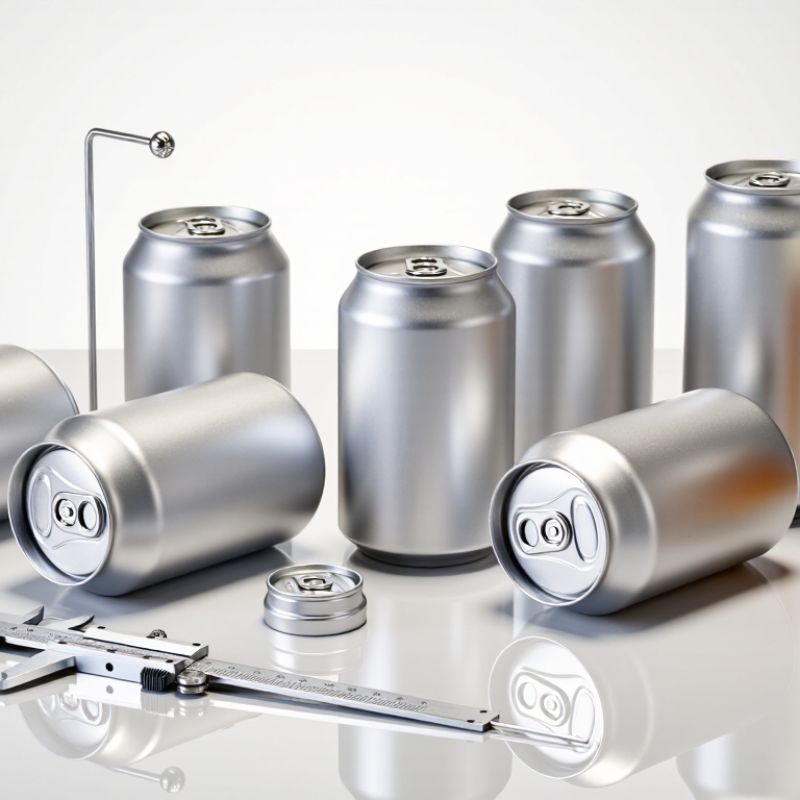
Aluminium beer cans are lightweight containers made from rolled aluminium sheet, usually with a protective internal coating. Their metal body blocks light and oxygen, helping preserve beer’s flavour and carbonation. The material also cools quickly, which matters in retail refrigerators and outdoor events. For global buyers, cans offer efficient stacking and lower transport weight than many rigid alternatives.
The International Aluminium Institute reports that around 75% of all aluminium ever produced remains in use today, largely because aluminium can be recycled repeatedly. The U.S. Environmental Protection Agency states that recycling aluminium uses about 95% less energy than producing primary aluminium. That is a serious advantage. Still, recycling is not automatic. A can discarded in mixed waste may never return to production. Collection systems, sorting quality, and local processing capacity remain decisive.
Aluminium also provides practical protection during long-distance shipping. Its opaque surface reduces light exposure, while its uniform shape supports automated filling and pallet handling. However, primary aluminium production requires substantial electricity and mining resources. Buyers should therefore examine recycled content, wall thickness, coating compliance, and verified recycling data. The figures can look impressive, yet supply chains differ widely between regions. A cheaper can may create higher environmental costs later. That uncomfortable detail deserves more attention.
Key Features of the Best Aluminium Beer Cans in 2026
The best aluminium beer cans balance protection, weight, and reliable filling performance. A strong can blocks light and oxygen, which helps preserve aroma, bitterness, and carbonation. Seam accuracy also matters. Small defects can create leaks, swelling, or filling-line interruptions. Buyers should request dimensional reports, pressure tests, and food-contact compliance documents before approval.
Lightweighting remains important, but thinner is not always better. Cans must survive stacking, vibration, and temperature changes during global shipping. The International Aluminium Institute reports that recycled aluminium requires about 5% of the energy used for primary aluminium production. Therefore, recycled content can reduce environmental impact, especially when local collection systems work effectively. However, recycled metal quality and regional supply can vary. This needs checking.
The best 2026 specifications should include consistent internal coating, easy-opening ends, clear batch traceability, and recyclable construction. European Aluminium has reported beverage-can recycling rates above 70% in some European markets, but performance differs worldwide. Buyers should ask for verified recycled-content percentages, carbon data, and coating migration results. I would also test cans with the actual beer formula. Laboratory approval alone can miss foaming, flavor changes, or seam problems during production. Small trials reveal uncomfortable weaknesses early.
Common aluminium beer-can formats vary by market and serving occasion. The chart compares widely used nominal capacities, helping global buyers select the most suitable can size for retail, hospitality, and on-the-go consumption.
Can size affects shipping cost, serving expectations, and filling-line efficiency. Common options include 250 ml, 330 ml, 355 ml, and 500 ml formats. Measure the can diameter and height against your existing trays, cartons, and equipment. A small mismatch can create costly line adjustments. Check the neck finish and end type before approving samples. Consumers also notice hand feel, stack stability, and opening comfort.
Material selection deserves closer attention than price alone. Many beverage cans use aluminium alloys with different strength and forming performance. A thinner body can reduce weight, but it may dent more easily during transport. Ask for alloy details, wall-thickness data, and recycled-content information. Confirm food-contact documentation and migration test results for your destination market. Sustainability claims need evidence, not attractive wording.
Manufacturing quality appears in small details. Inspect seam width, coating coverage, print registration, and internal lacquer consistency. Request burst-pressure results, leak tests, dimensional tolerances, and pallet-drop records. Samples should survive filling, cooling, stacking, and long-distance shipment. Visit the plant when possible. A clean floor does not prove reliable production. Review inspection records and compare several production batches. One overlooked issue is humidity during storage, which can damage cartons and labels. Make the decision with measured data, not one impressive sample.
For global buyers, aluminium beer cans must meet more than filling-line requirements. They need consistent dimensions, safe internal coatings, and reliable pressure performance. Food-contact documentation should match each destination market. Request migration test results, alloy details, and batch traceability. The International Aluminium Institute reports that recycled aluminium requires about 5% of the energy used for primary aluminium production. That represents roughly 95% energy savings. Yet recycled content varies by region and supplier.
Supply-chain resilience deserves equal attention. Compare production capacity, port access, minimum order quantities, and backup routes. Ask suppliers to disclose recycled-content calculations and carbon-accounting boundaries. The IAI’s Aluminium Sector Greenhouse Gas Pathways to 2050 highlights emissions reductions across refining, smelting, and recycling. A low-carbon can claim may still hide transport emissions. That detail is easy to miss. Buyers should also review pallet strength, humidity protection, and lead times during peak seasons. Small packaging failures can damage thousands of empty cans.
Tips: Build a dual-source plan before the first purchase order. Check certificates against current food-contact rules. Use trial pallets to test dents, stacking, and warehouse handling. Compare total delivered cost, not only the can price. The Ellen MacArthur Foundation’s circularity research supports designing packaging for recovery, but collection systems remain uneven worldwide. This creates an uncomfortable gap between recyclable and actually recycled. Buyers should record that gap honestly. Reassessment is necessary when freight, energy, or scrap prices change.
| Category | Buyer Evaluation Dimension | Typical Industry Data or Applicable Requirement | Practical Purchasing Consideration |
|---|---|---|---|
| Can Format | Common nominal capacities | 330 ml, 355 ml, 440 ml, 473 ml, and 500 ml are widely used beverage-can formats in international markets. | Select the format according to local retail conventions, filling-line compatibility, pallet configuration, and consumer demand. |
| Can Format | Standard can diameters | Common beverage-can body diameters are approximately 52–67 mm, depending on the can format and end specification. | Confirm body diameter, neck profile, flange dimensions, and end type with the filling equipment supplier before ordering. |
| Material | Can-body aluminium alloy | Aluminium alloys in the 3xxx series, especially 3004 and 3104, are commonly used for drawn and wall-ironed beverage-can bodies. | Request the alloy designation and temper in the technical specification; both affect formability, strength, and downgauging potential. |
| Material | Can-end aluminium alloy | 5182 aluminium alloy is widely used for beverage-can ends because of its strength and suitability for easy-opening-end production. | Check end-panel design, tab material, opening force, and compatibility with the selected body diameter. |
| Material | Typical lightweight construction | Modern aluminium beverage cans generally use a thin wall-ironed body and a thicker, mechanically reinforced end; exact gauges vary by format and supplier. | Compare total can weight rather than body thickness alone, because end design and diameter materially influence material consumption. |
| Food Safety | Internal protective coating | The internal lacquer or polymer coating must prevent direct contact between the beverage and aluminium and resist acidic, alcoholic, carbonated, and pasteurised products as applicable. | Request migration testing and beverage-specific compatibility data for beer, including alcohol content, acidity, carbonation, and shelf-life conditions. |
| Global Standards | European Union market access | Materials intended for food contact generally need to meet the EU Framework Regulation (EC) No. 1935/2004 and applicable good manufacturing practice requirements under Regulation (EC) No. 2023/2006. | Obtain a current Declaration of Compliance and supporting test documentation for the metal, coating, inks, and sealing compounds. |
| Global Standards | United States market access | Food-contact coatings and components should comply with applicable U.S. Food and Drug Administration requirements, including relevant sections of 21 CFR for indirect food-contact materials. | Verify that the compliance statement covers the complete can system and the intended beverage conditions of use. |
| Global Standards | China market access | Food-contact materials should be evaluated against applicable Chinese national food-safety standards, including the GB 4806 series and current packaging-material requirements. | Ask for Chinese-market documentation and testing where the cans will be filled, sold, or imported in China. |
| Quality Control | Critical dimensional checks | Important checks include can height, body diameter, neck diameter, flange geometry, end countersink, seam profile, and internal volume. | Use approved drawings and statistical process-control records; small dimensional deviations can cause seaming or conveyor problems. |
| Quality Control | Double-seam performance | A correctly formed double seam must provide mechanical integrity and hermetic closure. Seam height, thickness, overlap, tightness, and pressure resistance are commonly inspected. | Require seam teardown reports and line-trial approval using the buyer’s actual lid, filler, seamer, and operating conditions. |
| Quality Control | Internal pressure capability | Pressure performance depends on can diameter, alloy temper, wall and end design, carbonation level, filling temperature, and storage conditions. | Specify a validated pressure and deformation limit rather than relying on a generic value for all beer formats. |
| Sustainability | Recyclability | Highly recyclable Aluminium can material can be recycled repeatedly when collected, sorted, and remelted through an appropriate recycling system. | Prioritise markets with established collection and remelting capacity; recyclability claims should reflect the actual destination market. |
| Sustainability | Recycled aluminium content | Recycled-content levels vary by supplier, region, alloy availability, and certification scheme. Post-consumer content and pre-consumer content should be reported separately. | Request a verified recycled-content percentage, calculation method, chain-of-custody evidence, and material-balance explanation where applicable. |
| Sustainability | Carbon footprint | Primary aluminium production is generally more energy-intensive than recycled aluminium production. The actual footprint depends on electricity source, smelter technology, recycled content, transport, and conversion energy. | Compare product carbon-footprint data using the same system boundary, functional unit, allocation method, and verification level. |
| Sustainability | Decoration and ink considerations | Can decoration may involve external inks, varnishes, and over-varnishes. These materials can affect recyclability assessments and must meet relevant chemical and food-packaging requirements. | Request restricted-substance declarations, curing information, and recycling compatibility for the complete decorated can. |
| Supply Chain | Pallet and shipment protection | Empty cans are lightweight but high-volume products and can be vulnerable to denting, abrasion, moisture, and contamination during handling and transport. | Define pallet dimensions, stack height, wrapping method, corner protection, container loading pattern, and moisture-control requirements. |
| Supply Chain | Container utilisation | The number of empty cans per shipment varies substantially with can diameter, height, pallet design, packaging method, and allowable stacking load. | Request a confirmed pallet configuration and loading plan instead of estimating shipment quantity from can capacity alone. |
| Supply Chain | Lead-time planning | Production lead time depends on artwork approval, tooling or printing requirements, raw-material availability, production capacity, inspection, and international transport. | Build separate schedules for artwork approval, trial production, mass production, ocean freight, customs clearance, and inland delivery. |
| Supply Chain | Minimum order quantity | Minimum order quantities commonly increase when the project requires custom dimensions, special colours, complex decoration, or dedicated tooling. | For initial validation, consider a standard format and existing tooling before committing to a fully customised specification. |
| Supply Chain | Business continuity | Supply risk can arise from aluminium coil availability, energy costs, transport disruption, port congestion, regulatory changes, and limited regional production capacity. | Use approved alternative sources, dual-region qualification, safety stock, and documented change-notification procedures. |
| Commercial | Total landed cost | The delivered cost includes cans, ends, decoration, tooling, pallets, inland transport, ocean or air freight, insurance, duties, taxes, testing, and handling losses. | Compare suppliers using the same Incoterm, currency, freight assumption, packaging specification, and quality requirements. |
| Recommended Specification | Baseline for a global beer-can tender | Define capacity, body and end diameter, alloy and temper, coating system, decoration method, seam requirements, pressure performance, applicable food-contact markets, recycled-content target, packaging, and inspection plan. | A complete technical specification reduces quotation differences and makes supplier comparisons more reliable. |
2026 Best Aluminium Beer Cans for Global Buyers
Choosing the right can supplier requires more than comparing unit prices. In my experience, consistent quality begins with verified production controls. Ask for material certificates, food-contact declarations, coating specifications, and recent batch test results. A 330 ml can should arrive with stable dimensions, clean rims, and reliable seam performance. Small defects can become major filling-line losses. Request samples from several production lots, not one carefully selected carton. That detail matters.
Recycling performance also deserves serious attention. The International Aluminium Institute reports that aluminium recycling uses about 95% less energy than primary production. The Can Manufacturers Institute reported a 43% aluminium beverage can recycling rate in the United States in 2023. These figures support suppliers with strong recycled-content tracking and documented recovery systems. Check whether the supplier can provide recycled-content percentages, furnace records, and third-party audit results. Also review lead times, minimum order quantities, pallet protection, and port experience. A supplier may offer excellent prices but weak export coordination. I have seen apparently efficient sourcing plans fail at documentation and loading stages. That is not a minor issue. For global buyers, ISO 9001 certification, traceable quality records, and clear corrective-action procedures are practical trust signals. Claims still need testing. Payment terms, complaint handling, and replacement policies should be written plainly before production begins.
They are formed from rolled aluminium sheet, usually with a protective internal coating. The body is light and rigid.
Aluminium blocks light and limits oxygen exposure, helping preserve flavour and carbonation. It also cools quickly.
Their uniform shape supports automated filling, pallet stacking, and warehouse handling. They weigh less than many rigid containers.
No. Recycling can save about 95% energy compared with producing primary aluminium. But discarded cans may never return to production.
Ask for recycled-content calculations, collection assumptions, and processing locations. Regional systems differ greatly. The numbers may be incomplete.
Request alloy details, coating information, migration tests, pressure data, and batch traceability. Documents should match destination-market requirements.
Compare capacity, port access, minimum orders, lead times, and backup routes. Use two qualified sources when possible. One source feels fragile.
Test trial pallets for dents, stacking strength, humidity exposure, and warehouse movement. Small failures can damage thousands of empty cans.
Calculate total delivered cost, including freight, storage, losses, and recycling conditions. A cheaper can may create higher later costs.
Check whether carbon claims include mining, electricity, manufacturing, and transport emissions. Recyclable does not mean recycled. That gap matters.
Aluminium Beer Cans are lightweight, durable, and highly recyclable containers designed to protect beer from light, air, and handling damage. In 2026, the best cans combine reliable sealing performance, consistent dimensions, smooth surfaces, strong print quality, and food-contact-safe materials. Buyers should evaluate can sizes, wall thickness, alloy composition, internal coatings, and manufacturing precision to ensure compatibility with filling equipment and transport requirements. Quality control throughout forming, coating, printing, and inspection is essential for reducing defects and maintaining product consistency.
International buyers should also consider global packaging standards, recycling targets, environmental performance, and supply chain reliability. Important factors include recycled material content, energy-efficient production, stable lead times, export documentation, protective packaging, and the supplier’s ability to support customized specifications. Selecting the right supplier requires a balanced review of technical capability, testing procedures, production capacity, communication, cost transparency, and long-term service. A well-qualified supplier can help buyers achieve dependable packaging quality while meeting sustainability goals and the practical demands of international distribution.

Sunrise Cans