In 2026, global buyers are looking beyond appearance when selecting Aluminum Beverage Bottles. They want dependable protection, efficient logistics, responsible sourcing, and clear evidence of performance. A bottle may look polished on a product page, yet its real value appears during filling, transport, storage, and repeated customer use.
Robert Budway, President and CEO of the Aluminum Association, has stated, “Aluminum is infinitely recyclable.” That concise point matters. Aluminum can support circular packaging strategies when collection and recycling systems work effectively. However, recyclability alone does not guarantee sustainability. Buyers must still examine alloy quality, recycled content, coating safety, closure compatibility, and manufacturing transparency.
Details matter.
This guide reviews leading Aluminum Beverage Bottles for international purchasing teams in 2026. It considers bottle capacity, wall strength, surface finishing, insulation options, leak resistance, branding quality, and supplier responsiveness. A 500-milliliter sports bottle should feel firm in the hand, seal cleanly, and survive ordinary handling without sharp dents. A premium cosmetic finish should remain attractive after cartons move through humid warehouses and long-distance shipping.
The market is not perfectly uniform. Supplier claims can be incomplete, testing methods may differ, and attractive pricing may hide higher defect rates. That is why experienced buyers should request samples, technical documents, inspection records, and realistic production timelines before placing large orders. Some recommendations will also require rethinking, especially when low cost conflicts with durability or verified environmental performance.
The following outline offers a practical comparison for distributors, retailers, brand owners, and packaging professionals seeking reliable Aluminum Beverage Bottles worldwide.
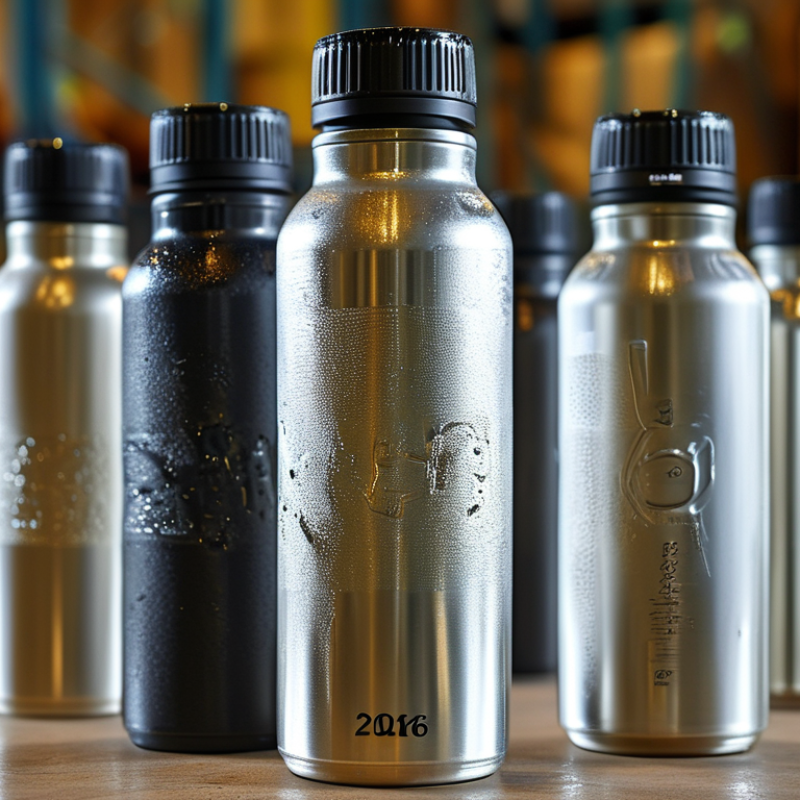
For global buyers, aluminum beverage bottles are entering 2026 with a strong circularity argument. The International Aluminium Institute reports that nearly 75% of all aluminum ever produced remains in productive use. That figure reflects aluminum’s long service life and high recycling value. It is not a guarantee of perfect recovery.
A bottle can leave a useful trail. Imagine a 500-milliliter container moving through filling, transport, collection, and remelting. The IAI states that recycling aluminum requires about 5% of the energy used for primary production. This advantage can reduce the bottle’s embodied emissions, especially where collection systems work efficiently. Buyers should request recycled-content evidence, alloy details, wall-thickness data, and food-contact migration tests. Closure compatibility matters too.
The 75% statistic needs careful interpretation. Aluminum remains in use, but some products sit in storage or enter inefficient waste streams. A recyclable bottle is not automatically recycled. Regional collection rates, coatings, labels, and mixed-material caps can change the outcome. The U.S. Environmental Protection Agency has repeatedly identified packaging recovery as dependent on local infrastructure and consumer sorting. That reality makes supplier audits essential. I would also question unusually broad carbon claims without verified lifecycle boundaries. For 2026 purchasing, compare recycled content, manufacturing energy, transport weight, deposit systems, and documented recovery pathways. The cheapest bottle may create the least visible value.
: A 250 mL bottle may weigh 15–25 grams. A 1,000 mL bottle may weigh 45–75 grams. Diameter, wall thickness, shoulders, and forming methods affect the final weight. Lighter is not always better.
Compare grams per usable milliliter, not weight alone. Very thin walls may dent during transport. Denting can increase rejection rates and product waste. A lighter design may create hidden costs.
Aluminum blocks light and offers nearly zero gas transmission. The protection depends on an intact bottle body. Internal coatings must prevent contact with acidic beverages. Small scratches and pinholes can weaken performance.
Request migration, extraction, and coating-adhesion results. Ask for testing under realistic storage temperatures. Heat testing may reveal failures missed at room temperature. Standard checks can be too comfortable.
A 500 mL format often balances handling and transport efficiency. A 250 mL bottle suits smaller servings and lighter loads. A 750 or 1,000 mL bottle supports larger servings. Larger formats need stronger neck and base designs.
Check thread fit, liner compression, opening torque, and resealing. Perform leakage tests after vibration exposure. Carbonated products require pressure testing under intended filling conditions. A good cap can still fail during transport.
Request food-contact declarations for the alloy, coating, inks, adhesives, and closure. Ask for migration or extraction reports using realistic conditions. Acidic juice requires different evidence from still water. A certificate alone is not enough.
Review batch records, laboratory reports, coating declarations, and change-control files. Check whether supplier changes were documented before production. Recycled aluminum can reduce energy use substantially. However, recycling depends on local collection systems. The paperwork may look complete. One missing change record still matters.
The 2026 market for Aluminum Beverage Bottles is shaped by durability, sustainability, and strict food-contact requirements. Because approximately 75% of all aluminum ever produced remains in use, aluminum supports a long-term circular economy. Recycling aluminum requires about 95% less energy than producing primary metal, helping reduce resource consumption and manufacturing emissions. These advantages make aluminum bottles suitable for beverages ranging from water and juice to functional and carbonated drinks.
Material selection is central to bottle performance. 3004 aluminum generally offers excellent formability and reliable food-contact suitability, while 3104 can provide higher strength for lightweight designs and demanding production conditions. Common bottle formats from 250 to 1,000 mL require careful evaluation of weight, barrier protection, neck design, and closure compatibility. Global buyers should also confirm compliance with FDA 21 CFR, EU Regulation 1935/2004, LFGB requirements, and ISO 22000-based food safety management practices. Together, these factors help buyers select safe, recyclable, and commercially practical aluminum packaging for international markets.

 Sunrise Cans