How to Choose Aluminium Tin Containers for Global Sourcing?

Time:2026-10-04 Author:Sophia
0%

Choosing Aluminium Tin Containers for global sourcing requires more than comparing prices on a supplier’s website. The right decision connects material performance, product protection, manufacturing consistency, and destination-market requirements. A container may look polished in a sample, yet fail after repeated opening, stacking, or long-distance transport.

Experienced buyers usually begin with the product itself. Consider the contents, filling temperature, expected shelf life, and contact sensitivity. Then review the aluminium alloy, wall thickness, coating, lid fit, and surface finish. A 0.23-millimeter wall may suit lightweight packaging, while a thicker structure can reduce dents during ocean shipping. Small details matter. Ask for dimensional drawings, closure samples, coating information, and test reports. Do not rely on photos alone.

Supplier evaluation also deserves careful attention. Check factory capabilities, production equipment, quality-control procedures, and previous export experience. Request a pre-production sample and compare it with the approved specification. Verify packaging strength, carton labeling, pallet arrangements, and traceability records before placing a large order. Regulatory expectations differ across markets, so confirm applicable food-contact, chemical, labeling, and recycling requirements with qualified local professionals. Certifications can support trust, but they should be checked for scope and validity.

A low quotation may hide higher costs later. This is easy to miss. Freight, tooling, inspection, defects, and delayed delivery can change the final calculation. No checklist is perfect. Even careful sourcing teams should review their assumptions after each shipment. By combining technical evidence, supplier communication, and practical testing, buyers can select Aluminium Tin Containers with greater confidence and fewer costly surprises.
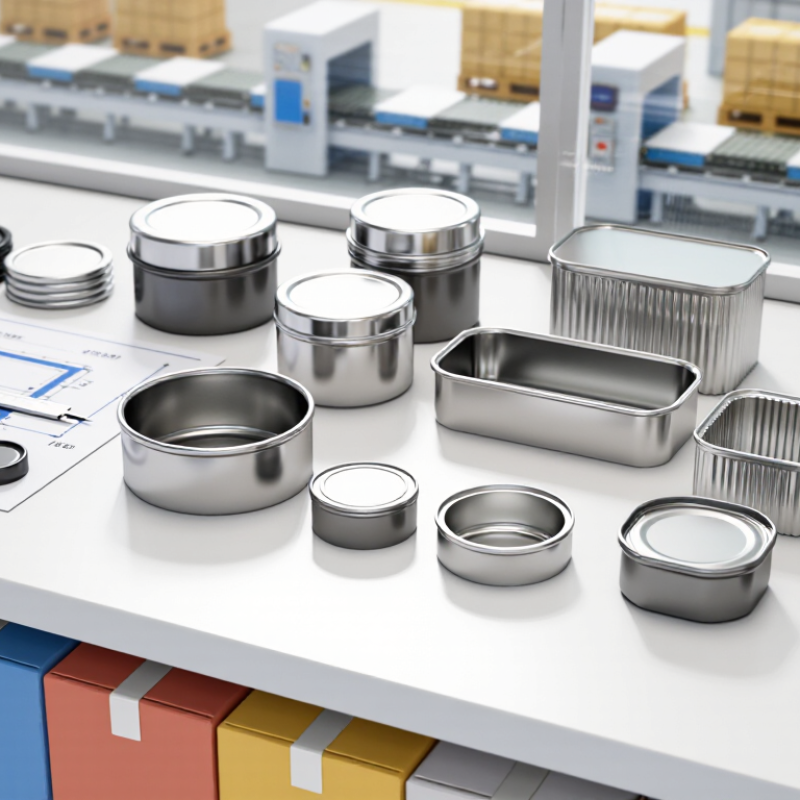
How to Choose Aluminium Tin Containers for Global Sourcing?

Understanding Aluminium Tin Containers and Their Common Uses

How to Choose Aluminium Tin Containers for Global Sourcing?

Aluminium tin containers are lightweight, stackable, and suitable for many everyday products. They are commonly used for cosmetics, candles, food items, tea, small gifts, and household accessories. Aluminium resists rust and keeps transport weight low. Tinplate containers, often confused with aluminium tins, use steel with a protective coating. They usually feel firmer and can provide strong protection against crushing.

The container’s use should guide the material choice. Food-related packaging needs suitable inner coatings and clean manufacturing controls. Cosmetic products may require resistance to oils, waxes, or alcohol-based formulas. A tight-fitting lid helps protect contents from dust and moisture. However, “airtight” should not be assumed without testing. Check wall thickness, lid fit, coating quality, surface finish, and closure performance. Small details matter, especially after long international transport.

Tips: Request samples before placing a large order. Test stacking, opening, filling, and repeated closing. Measure the usable inner size, not only the outer dimensions. Ask for material specifications and inspection records. It is also wise to confirm packaging for export handling. Cartons that look strong may still fail in humid storage. My own checklist would include drop testing, but this step is sometimes overlooked when the container looks attractive. A polished surface is not proof of reliable performance. Use verified data, not assumptions.

Understanding Aluminium Tin Containers and Their Common Uses

Selected reference properties of commercially pure aluminium that influence container weight, heat transfer, corrosion resistance, and forming performance.

Food and Confectionery

Used for chocolates, mints, spices, tea, biscuits, and other dry foods because aluminium is lightweight and can provide an effective barrier against light and moisture when properly sealed.

Cosmetics and Personal Care

Commonly selected for balms, solid perfumes, creams, waxes, and travel-size products due to its low weight, malleability, and compatibility with printed or coated finishes.

Industrial and Household Products

Suitable for polishes, candles, hardware, samples, and small components. The final choice should also consider wall thickness, lid fit, coating, leakage resistance, and required certifications.

Reference values for commercially pure aluminium: density 2.70 g/cm³, melting point 660.3°C, thermal conductivity 237 W/m·K, and electrical conductivity 37.7 MS/m. Values vary by alloy, temper, and temperature.

Defining Your Product, Capacity, and Performance Requirements

How to Choose Aluminium Tin Containers for Global Sourcing?

Defining your product starts with its actual use, not a catalogue image. Will the container hold balm, powder, food, or a liquid? Each product changes the required alloy, lining, closure, and testing plan. A greasy balm may need an internal coating. A dry powder may need a tighter lid and controlled stacking. Measure the fill volume, headspace, opening diameter, and label area. Small errors become expensive during mass production.

Capacity is more than nominal volume. A 100 ml container may not hold 100 ml of every product. Viscosity, filling temperature, and dispensing tools affect usable capacity. Request dimensional drawings and tolerance data. Then test samples under real filling conditions.

The International Aluminium Institute reports that aluminium recycling uses about 95% less energy than primary production, so recycled content can support a stronger sourcing case. However, recycled metal may affect appearance and forming consistency. That trade-off deserves testing.

Performance requirements should be written as measurable limits. Specify leak resistance, lid torque, drop height, stacking load, temperature range, and corrosion exposure. For export shipments, test sealed samples after vibration and humidity cycles. ISO 8317 provides guidance on child-resistant packaging, where applicable.

Do not assume a thicker wall solves every problem. It can increase weight, freight cost, and material use. I have seen attractive samples fail because the lid fit was never checked after filling. Supplier claims are useful, but independent verification is safer.

Comparing Materials, Shapes, Closures, and Customization Options

For global sourcing, material choice should match the product, route, and filling process. Aluminium is light, corrosion-resistant, and easy to form into shallow trays or rounded tins. The International Aluminium Institute reports that recycled aluminium uses about 5% of the energy required for primary metal. That matters when freight costs and carbon reporting are reviewed together. Tinplate offers higher rigidity and magnetic detection, but it can require more protective coating control. Small detail, big consequence.

Shape affects stacking, filling speed, and empty-space costs. Round containers resist denting well, while rectangular formats use warehouse space more efficiently. Deep bodies need stronger sidewalls and tighter dimensional checks. Closures deserve equal attention. Slip lids suit dry products and frequent opening, while screw caps support better resealing. Check thread fit, gasket material, torque range, and leakage performance. A beautiful lid that loosens during vibration is still a sourcing failure. ASTM D4169 testing can help simulate distribution stress, although laboratory conditions never perfectly match every route.

Customization may include embossing, printed finishes, internal coatings, color matching, or modified tooling. Request coating migration documents and food-contact declarations where relevant. ISO 9001 certification can indicate process discipline, but it does not replace batch inspection. Ask for wall-thickness data, closure samples, dimensional tolerances, and carton drop-test records. The U.S. EPA’s latest packaging data shows metal packaging recycling remains far below full recovery, so material separation and local recycling infrastructure deserve review. I would also test two suppliers, not one. Samples can hide inconsistencies.

How to Choose Aluminium Tin Containers for Global Sourcing? — Comparing Materials, Shapes, Closures, and Customization Options

Comparison of aluminium tin container materials, shapes, closures, and customization options for global sourcing.
Comparison Dimension Aluminium Containers Tinplate Steel Containers Recommended Sourcing Considerations
Base Material Usually formed from aluminium sheet or foil. Common container alloys include the 3000 series, which offers good formability and corrosion resistance. Low-carbon steel coated with a thin layer of tin. It provides good stiffness and is widely used for rigid metal packaging. Request the exact alloy or steel specification, temper, thickness, food-contact declaration, and applicable compliance documents.
Typical Material Thickness Approximately 0.20–1.00 mm, depending on the forming process, container size, lid design, and required rigidity. Approximately 0.15–0.50 mm for many small and medium rigid containers, subject to the product design and forming method. Thickness should be validated through samples and compression, drop, stacking, and lid-fit testing rather than selected by thickness alone.
Weight and Portability Generally lightweight and suitable for products where reducing packaging mass and transport weight is important. Generally heavier than aluminium at an equivalent package size, but often provides higher perceived rigidity. Compare the complete packed unit weight, including lid, liner, label, and secondary packaging.
Barrier Performance Provides an effective barrier against light, oxygen, moisture, and many external contaminants when the container and closure are properly designed. Provides strong protection from light and physical damage. Internal coatings may be needed when the product could react with exposed metal. For oxygen- or moisture-sensitive contents, evaluate the container, liner, coating, gasket, and closure as one complete system.
Corrosion Considerations Naturally forms a protective oxide layer, but may still require a coating or liner for acidic, alkaline, salty, or chemically active contents. The tin coating protects the steel substrate; scratches, exposed edges, condensation, or aggressive contents may increase corrosion risk. Conduct compatibility testing using the actual formula, fill temperature, storage time, humidity, and distribution conditions.
Recycling Profile Widely recyclable where collection and sorting systems exist. Aluminium recycling can conserve substantial energy compared with primary production. Steel is widely recyclable through magnetic separation. Tinplate is normally processed as steel after the coating is removed or incorporated into the recycling stream. Confirm local recycling infrastructure, coating composition, mixed-material components, and labeling requirements in each destination market.
Round Shape Suitable for balms, candles, cosmetics, confectionery, travel kits, and compact promotional packs. Suitable for products requiring a more rigid cylindrical or round container and a stronger embossed appearance. Efficient for rotational labeling and stacking; verify internal diameter, usable fill volume, and lid clearance.
Rectangular or Square Shape Efficient use of shelf and carton space, with a clean surface for labels, printing, or embossing. Offers strong edge definition and rigidity, making it suitable for gift sets, biscuits, accessories, and solid products. Check corner radii, nesting performance, pallet utilization, and the risk of panel distortion during forming.
Oval or Custom Shape Possible through stamping or forming, but complex geometry can increase tooling cost and production risk. Also possible through dedicated tooling; sharper details may be achievable depending on material temper and forming depth. Obtain a 2D drawing and 3D sample before tooling approval. Define tolerances for height, diameter, wall angle, and lid fit.
Friction-Fit Lid Simple, economical, and convenient for frequent opening. It is commonly used for dry goods and semi-solid products. Provides a familiar rigid package format and can be designed with a tight mechanical fit. Specify opening force, lid retention, anti-rattle performance, and whether a gasket or inner seal is required.
Slip Lid or Sliding Lid Suitable for compact containers and products requiring quick access, although dimensional accuracy is important. Can provide a firm sliding action and a robust feel when the body and lid are formed accurately. Test repeated opening and closing, lid deformation, edge sharpness, and resistance to accidental opening during shipping.
Screw Cap Suitable when repeated resealing and improved leak resistance are needed. The cap may include plastic or elastomer components. Suitable for rigid packs requiring threaded access, but the complete closure may add weight and multiple materials. Define thread standard, liner material, torque range, leak-test method, and compatibility with the product formula.
Hinged Lid Convenient for repeated use and can reduce the risk of losing the lid. Hinge design may require additional forming operations. Offers a durable, premium-feeling opening mechanism and is suitable for reusable containers. Test hinge cycle life, lid alignment, opening angle, closure retention, and pinch-point safety.
Seal and Liner Options Options may include aluminium foil seals, paperboard liners, foam liners, rubber or elastomer gaskets, and internal coatings. Options may include paperboard liners, polymer gaskets, foil seals, and internal protective coatings. Select materials according to food-contact, cosmetic, pharmaceutical, chemical, temperature, and migration requirements.
Surface Finish Natural metal, brushed, anodized, matte, polished, or coated finishes may be available depending on the manufacturing process. Natural tinplate, painted, lacquered, matte, gloss, or textured finishes may be available. Approve a physical color standard. Printed color can vary with substrate, coating, ink system, and curing conditions.
Printing and Decoration Common options include offset printing, screen printing, digital printing, labeling, laser marking, and selective coating. Common options include offset printing, lithographic printing, embossing, debossing, labeling, and decorative coating. Confirm artwork bleed, registration tolerance, minimum text size, barcode readability, varnish type, and scratch resistance.
Embossing and Debossing Available for logos, patterns, and tactile details, subject to material thickness, depth, spacing, and shape complexity. Often provides strong definition and a rigid embossed appearance, subject to tooling and forming limits. Review a tooling drawing before production. Avoid placing deep embossing too close to corners, seams, or closure areas.
Tooling and Customization Cost Standard sizes and shapes usually reduce tooling cost and shorten development time. Custom profiles may require dedicated dies. Standard formats can be cost-efficient, while custom shapes, hinges, and deep embossing may require several forming tools. Separate one-time tooling charges from unit pricing, sampling charges, printing plates, coatings, and testing fees.
Best-Fit Product Categories Balms Cosmetics Candles Dry Foods Travel Kits Confectionery Biscuits Gift Sets Accessories Collectibles Match material selection to product chemistry, target shelf life, required appearance, filling process, and retail positioning.
Global Compliance Checks Confirm food-contact or cosmetic-contact suitability where applicable, coating and ink declarations, heavy-metal restrictions, and destination-market labeling rules. Confirm food-contact or cosmetic-contact suitability where applicable, internal lacquer performance, coating declarations, and destination-market requirements. Ask for a material specification, certificate of conformity, migration or compatibility test results, packaging composition, and country-of-origin documents.
Recommended Selection Priority Choose aluminium when low weight, corrosion resistance, recyclability, or a refined lightweight appearance is a primary requirement. Choose tinplate steel when rigidity, embossed detail, structural strength, or a traditional rigid-tin appearance is more important. Prioritize product compatibility and closure performance first, then compare decoration, tooling, landed cost, and supply-chain risk.

Note: Thickness ranges, shapes, finishes, and closure configurations are typical industry guidance rather than universal specifications. Final values should be confirmed through technical drawings, production samples, compatibility testing, and destination-market compliance review.

Evaluating Suppliers, Quality Standards, and Production Capabilities

Global sourcing of aluminium or tin containers starts with supplier evidence, not attractive samples. Ask for alloy or tinplate grade, coating chemistry, wall thickness, and dimensional tolerances. A reliable factory should share batch records, test methods, corrective-action reports, and recent third-party audit findings. ISO 9001 certification helps, but it does not prove every shipment is consistent. ISO’s Survey reports more than one million ISO 9001 certificates worldwide, so certification alone is a weak filter. Request three production samples from separate lots. Inspect rim height, lid fit, corner radius, and scratches under bright light. Small defects matter.

Quality standards must match the destination and product. For food contact, verify applicable migration testing, declarations of compliance, and ink or lacquer restrictions in each market. Ask whether the plant tests leakage, stacking strength, coating adhesion, and corrosion resistance. Production capability appears in less glamorous details: press capacity, tooling ownership, spare molds, line speed, inspection frequency, and contingency plans. A supplier quoting 500,000 pieces monthly may rely on one aging line. That is a risk. The International Aluminium Institute reports that recycled aluminium uses about 95% less energy than primary aluminium. Therefore, request recycled-content evidence, chain-of-custody records, and separate material traceability. Sustainability claims need paperwork.

Tips: Build a weighted scorecard with quality, capability, compliance, cost, and resilience. Run a pilot order before signing annual volumes. Measure defect rates, delivery variance, and response time. Ask what happens when the main coating line stops. No audit is perfect. Human judgment still matters.

Calculating Costs, Compliance Needs, Shipping, and Delivery Risks

How to Choose Aluminium Tin Containers for Global Sourcing?

A reliable cost model includes more than the quoted unit price. Add tooling, alloy grade, forming, coating, printing, testing, duties, inland transport, and warehouse handling. Aluminium prices can change before production starts, so request a validity period and a price-adjustment formula. The World Bank’s Commodity Markets Outlook regularly tracks aluminium price volatility, making fixed assumptions risky. For food, cosmetics, or pharmaceutical applications, confirm material declarations, coatings, migration testing, and traceability before approving samples. Requirements vary by destination and product use. A certificate alone is not enough. Review the actual test scope.

Shipping creates another layer of uncertainty. UNCTAD’s Review of Maritime Transport reports that more than 80% of world merchandise trade by volume moves by sea. That makes port congestion, blank sailings, weather, and container shortages important planning factors. Compare sea, rail, and air options using total landed cost, not freight alone. The World Bank Logistics Performance Index 2023 highlights customs, infrastructure, tracking, and timeliness as major logistics dimensions. Ask suppliers for carton dimensions, pallet patterns, loading photos, and drop-test evidence. Small dents become expensive when thousands of tins reach a distribution center. Build safety stock around realistic transit variation, not the best-case schedule.

Perfect forecasts are rare. My own costing checklist would still challenge exchange rates, inspection timing, and damage allowances before purchase approval. A pilot shipment can reveal weaknesses that a polished quotation hides.

FAQS

What are aluminium tin containers commonly used for?

They hold cosmetics, candles, food items, tea, small gifts, and household accessories. They are lightweight and stack neatly.

How does aluminium differ from tinplate?

Aluminium resists rust and keeps transport weight low. Tinplate uses coated steel and usually feels firmer. Neither material suits every product.

How should I choose the container material?

Match the material to the product’s oils, waxes, alcohol content, moisture, and storage conditions. Food packaging needs suitable inner coatings and clean manufacturing controls.

What should I inspect before ordering?

Check wall thickness, lid fit, coating quality, surface finish, and closure performance. Measure usable inner space, not only outside dimensions. Small details matter.

Does a tight lid make the container airtight?

No. A tight-fitting lid can reduce dust and moisture entry, but airtight performance requires testing. Do not trust appearance alone.

Should I request samples before a large purchase?

Yes. Test stacking, filling, opening, and repeated closing with real handling conditions. A polished sample can still fail.

Which costs belong in the total purchasing budget?

Include tooling, material grade, forming, coating, printing, testing, duties, inland transport, and warehouse handling. Freight alone is not the landed cost.

How can I reduce shipping and delivery risks?

Compare sea, rail, and air using total landed cost and realistic delivery times. Consider port delays, weather, customs, shortages, and damaged cartons. Keep safety stock.

What documents and tests should I request?

Ask for material specifications, coating details, test scope, traceability, inspection records, carton dimensions, and loading photos. A certificate alone may not prove suitability.

What packaging tests are easy to overlook?

Perform drop testing and inspect cartons after humid storage. Check whether small dents affect lids or stacking. I might overlook damage allowances too.

Conclusion

Choosing the right Aluminium Tin Containers for global sourcing requires a clear understanding of both product needs and supply chain conditions. Start by identifying the intended application, product type, required capacity, dimensions, and performance expectations, including durability, protection, temperature resistance, and ease of use. Then compare material thickness, container shapes, closure systems, surface finishes, printing, labeling, and other customization options to ensure the packaging matches functional and presentation requirements.

Supplier evaluation is equally important. Review manufacturing experience, quality control procedures, testing capabilities, certifications, production capacity, and communication reliability. A complete sourcing decision should also consider unit pricing, tooling and customization fees, minimum order quantities, packaging, shipping costs, import requirements, and delivery schedules. Assessing compliance documentation and potential risks such as production delays, material changes, or transportation damage can help create a more dependable purchasing plan. By balancing design, quality, cost, compliance, and logistics, buyers can select Aluminium Tin Containers that support consistent performance and efficient international distribution.


Sophia

Sophia

Sophia is a dedicated marketing professional with an exceptional depth of knowledge about her company's products and services. With a keen understanding of market trends and customer needs, she crafts insightful blog posts that not only inform but also engage readers, enriching the company’s online......