Choosing the right Aluminium Pump Bottles involves more than selecting a polished, recyclable container. The bottle must protect the formula, deliver a consistent dose, and feel dependable in the hand. A bathroom shelf may expose it to water, heat, fingerprints, and accidental drops. Small details matter.
Dr. Andrew H. Dent, a materials and packaging innovation specialist, explains, “A successful package balances material performance, user experience, and the product inside.” That balance guides every recommendation in this article. Aluminium can offer strength, a premium appearance, and strong barrier properties. However, it is not automatically the best choice for every formula or market. The pump, lining, shoulder design, and internal compatibility deserve equal attention.
A bottle can look excellent.
Yet, it may leak.
The following ten tips examine practical factors such as aluminium grade, corrosion resistance, pump performance, closure fit, recyclability, and supplier quality control. They also consider how the bottle behaves during filling, transport, daily use, and storage. These points come from common packaging evaluation practices, but real projects remain imperfect. A sample may perform well in the laboratory and still frustrate users in a busy shower. A premium finish may hide weak threading. A low price may create higher replacement costs later.
Good selection requires testing, not assumptions. Compare filled samples, inspect the pump after repeated use, and request compatibility data from the manufacturer. With careful evaluation, Aluminium Pump Bottles can support product protection, brand presentation, and a more responsible packaging strategy.
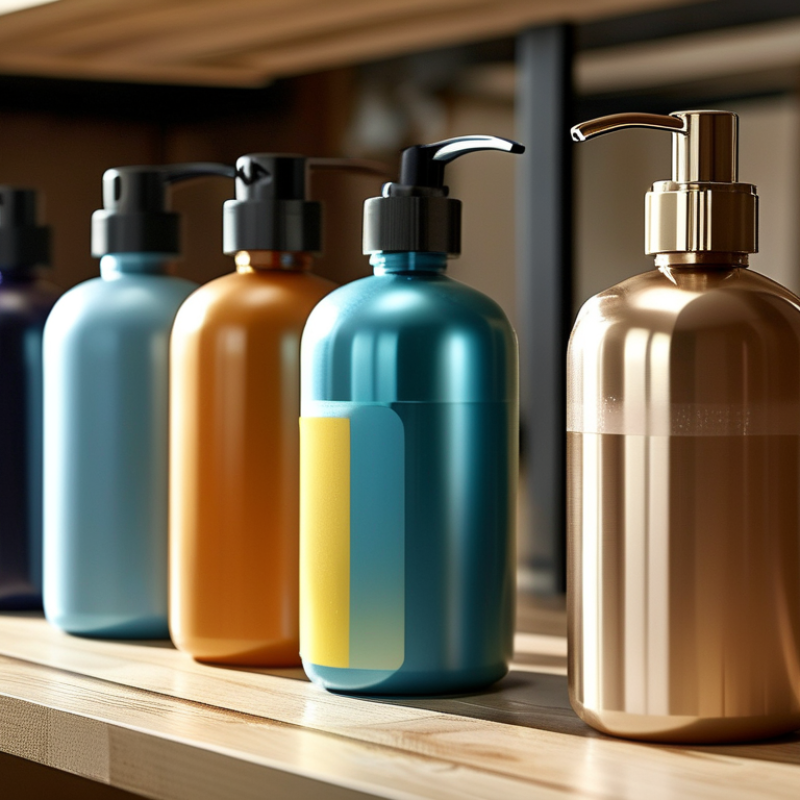
Aluminium pump bottles are lightweight containers formed from corrosion-resistant metal. They usually include an inner coating, threaded neck, dip tube, and measured pump.
The coating matters. Without it, acidic or salty formulas may react with the aluminium. Check compatibility with the actual formula, not just its fragrance or color.
Viscous products may need a wider dip tube. Thin liquids often need a controlled actuator.
Why use aluminium? It blocks light well, feels solid, and resists crushing during daily handling. It also supports repeated recycling.
The International Aluminium Institute reports that recycling aluminium uses about 5% of the energy required for primary production. That is a meaningful advantage, though recycling performance depends on collection systems and local sorting. Packaging alone cannot solve every environmental problem.
For selection, inspect the aluminium grade, coating integrity, pump output, closure fit, and leak resistance. Ask for migration and compatibility testing.
A 0.25-millilitre pump may feel precise, but it can frustrate users with thicker liquids. Test the bottle after heat, cold, drops, and repeated pumping.
The Ellen MacArthur Foundation notes that packaging systems need practical reuse and recovery pathways, not attractive materials alone. This is where many evaluations become too optimistic. A beautiful metal bottle can still waste product if the pump clogs or leaves a large residue.
Choosing aluminium pump bottles starts with the metal, not the finish. Ask for the alloy grade, wall thickness, and production batch records. A reliable supplier should explain these details clearly. I inspect the shoulder, base, and neck under bright light. Dents, pinholes, or uneven seams can signal weak forming control. Small defects matter. But appearance alone proves little.
Request test data for dimensional tolerance, leakage, and internal corrosion resistance. For creams, oils, or acidic formulas, the inner coating deserves special attention. A protective lining should cover the neck and base without thin spots. Ask whether the coating suits the formula’s pH, alcohol level, and essential oils. Keep a filled sample at room temperature, then check it after heat and cold exposure. Look for discoloration, odor, peeling, cloudiness, or a changed pump stroke. These simple checks often reveal problems before shipment.
Do not accept vague claims such as premium aluminium or advanced coating. Request coating specifications, migration or compatibility evidence, and inspection standards. Independent laboratory reports add useful confidence, especially for large production runs. Still, documents can be outdated or tied to another batch. I would compare samples from different lots and record weight, dimensions, and pump output. The process is slower. That may be its weakness. Yet it creates traceability and exposes inconsistent quality early.
Choosing an aluminium pump bottle starts with the product inside it. A thin facial serum needs a different pump from a thick hand cream. I test the formula at room temperature and after storage changes. This reveals whether the pump pulls smoothly or struggles. Viscosity matters greatly. So does the bottle’s internal coating, especially when the formula contains oils or active ingredients.
Choose capacity according to daily use, not appearance. A 30 ml bottle suits travel and precise dosing. A 250 ml bottle works better beside a sink. Large bottles reduce refilling, but they may feel heavy during one-handed use. I once selected a container that looked practical, yet its narrow base tipped easily. That mistake was avoidable. Check the shoulder shape, base stability, and available space before ordering samples.
Dispensing style should match the user’s movement. A lockable pump helps prevent accidental pressing during transport. A wide actuator feels comfortable for frequent hand washing. For controlled skincare application, a smaller output per stroke is often more reliable. Airless-style systems can protect sensitive formulas, but they usually require more careful testing. Measure the actual dose from ten pumps, not one. Small differences become significant over time. There is no perfect pump. A pump can also change after repeated use, so evaluate the first stroke, the final stroke, and the user’s grip.
Typical pump output ranges to help match the pump, capacity, and dispensing style to the product.
How to use this chart: Choose a lower-output treatment or mist pump for concentrated formulas and controlled dosing. Lotion and cream pumps generally deliver more product per actuation and work better with thicker formulas. Match the bottle capacity to the expected usage period: smaller 30–60 mL bottles suit travel or trial products, while 100–250 mL sizes are more practical for regular daily use.
The ranges shown are typical industry dispensing values and should be confirmed with a compatibility, leakage, and dosage test for the selected formula.
10 Tips for Choosing Aluminium Pump Bottles
How to Compare Design, Sustainability, Cost, and Supplier Reliability
Start with the dispensing experience. A pump should deliver a consistent dose without sticking, leaking, or leaving product around the collar. Check the neck finish, actuator force, dip-tube length, and closure fit with your actual formula. Small details matter. Test at different temperatures and after repeated pumping. Aluminium protects against light, but its inner coating must resist corrosion and chemical migration. Request compatibility records, material specifications, and batch samples before approving a design.
Sustainability needs more than a recycled-content percentage. The International Aluminium Institute reports that about 75% of all aluminium ever produced remains in use, reflecting strong material recyclability. However, recycling still depends on collection systems, coatings, pumps, and separation processes. Ask for verified recycled-content evidence, preferably supported by ISO 14021 documentation or an environmental product declaration. Compare bottle weight, recycled content, coating chemistry, and transport distance together. Lightweighting can reduce emissions, but an overly thin wall may increase dents and returns. That trade-off deserves testing.
Cost should include tooling, pump assembly, filling speed, damage rates, freight, and minimum order quantities. A lower unit price can hide expensive defects. Supplier reliability requires more than a polished factory tour. Review quality certifications, inspection procedures, corrective-action records, lead-time history, and backup production capacity. The World Bank’s 2023 Logistics Performance Index highlights customs, infrastructure, tracking, and timeliness as supply-chain factors. Use those indicators when assessing delivery risk. I would also request a pilot order. It may expose weaknesses earlier than a contract does. Supplier claims are useful, but independently checked records are safer.
| No. | Comparison Dimension | Practical Benchmark or Data Point | How to Verify | Decision Signal |
|---|---|---|---|---|
| 1 | Bottle Capacity and Format | Compare the intended fill volume, commonly 30–500 mL for personal-care and household products. Allow sufficient headspace for the pump and formulation expansion. | Check calibrated capacity, overflow capacity, dimensions, and compatibility with the filling line. | Select the smallest practical format that meets the use case to reduce material, shipping volume, and storage space. |
| 2 | Aluminium Grade and Corrosion Protection | The container should use a suitable aluminium alloy and an internal coating or liner when the formula contains water, salts, acids, alcohol, or other corrosive ingredients. | Request the alloy specification, coating type, coating thickness range, and chemical-resistance test results. | Prefer documented compatibility testing over appearance-based selection. |
| 3 | Pump Performance | Compare output per stroke, typically measured in millilitres per actuation. A lower output supports controlled dosing, while a higher output reduces the number of pumps needed. | Test at least 30 consecutive actuations and record average output, variation, priming strokes, leakage, and lock function. | Choose consistent dosing with low variation and reliable re-priming after storage. |
| 4 | Closure Fit and Leak Resistance | The neck finish, dip tube, gasket, and pump thread must be matched as a complete system. Leakage risk increases when components are sourced separately without fit testing. | Perform upright, inverted, vibration, and temperature-cycle tests using filled production samples. | Reject designs showing seepage, pump back-off, cap damage, or loss of prime. |
| 5 | Surface Finish and Decoration | Compare anodized, painted, printed, brushed, and uncoated finishes for abrasion resistance, visual consistency, and recyclability considerations. | Review rub, scratch, adhesion, color-consistency, and accelerated-aging test results on production-equivalent samples. | Use the simplest finish that meets the required appearance and durability. |
| 6 | Recycled Aluminium Content | Aluminium can be recycled repeatedly when collected and processed correctly. Recycled aluminium generally requires substantially less energy than primary aluminium production, often cited at approximately 95% less energy. | Request a material declaration, recycled-content percentage, chain-of-custody evidence, and a recognized recycled-content certification where applicable. | Prefer verified recycled content rather than unsupported marketing claims. |
| 7 | Material Separation and End-of-Life | A separable aluminium body, pump, dip tube, spring, gasket, and coating can improve sorting and recycling outcomes. Mixed materials may require additional processing. | Review component material weights and confirm whether the pump can be removed without specialized equipment. | Favor clear disposal instructions and designs with fewer inseparable material combinations. |
| 8 | Total Cost of Ownership | Unit price is only one cost. Include tooling, decoration, pump components, testing, filling efficiency, freight, minimum order quantity, defect rate, and end-of-life requirements. | Compare landed cost per filled unit and calculate cost per successful saleable unit after rejects and shipping damage. | Choose the lowest reliable landed cost, not simply the lowest quoted unit price. |
| 9 | Quality Control and Traceability | Key controls include incoming-material inspection, dimensional checks, coating checks, pump-output testing, leak testing, and batch identification. | Request a quality plan, inspection records, sample retention policy, corrective-action process, and batch traceability procedure. | Prefer suppliers that can provide measurable acceptance criteria and documented corrective actions. |
| 10 | Supplier Capacity and Delivery Reliability | Assess production capacity, standard lead time, peak-season capacity, tooling ownership, backup processes, export documentation, and response time for quality issues. | Request a capacity statement, recent on-time-delivery data, lead-time assumptions, business-continuity plan, and pre-production approval samples. | Select a supplier that can demonstrate repeatable delivery performance and transparent communication. |
Aluminium, coatings, pumps, and gaskets may react differently. Check pH, alcohol, oils, salts, and surfactants first.
Request the coating material, thickness, curing conditions, and test records. Vague safety claims are not enough.
Fill sample bottles with the actual formula. Store them at room temperature and under heat. Check odor, color, leakage, corrosion, and pump movement.
Test seals under pressure and vacuum. Check the bottle, dip tube, and gasket separately. A tiny mismatch can cause slow leakage.
Measure pump torque after vibration and handling tests. Inspect the collar, thread, actuator, and closure for movement or leakage.
A pump may work once, then stick after hundreds of cycles. Test dose consistency, leakage, and residue around the collar.
Review recycled content, bottle weight, coating chemistry, and transport distance together. Recycling can become difficult when pumps and mixed materials remain attached.
Include tooling, pump assembly, filling speed, freight, minimum orders, damage, and returns. A cheaper bottle may create higher total costs.
Review inspection procedures, quality records, delivery history, corrective actions, and backup capacity. Request a pilot order. It may reveal weaknesses early.
Not necessarily. A thinner wall may dent more easily and increase returns. I would test durability before trusting the weight reduction.
Choosing the right Aluminium Pump Bottles requires more than comparing appearance and price. These containers are valued for their lightweight strength, durability, and ability to protect many everyday liquid products from light and handling damage. When evaluating options, examine the aluminium grade, wall thickness, and the quality of any internal or external protective coating. A suitable coating can help prevent corrosion, preserve product quality, and maintain a clean appearance over time.
The pump should match the product’s thickness, usage frequency, and desired dispensing amount, while the bottle capacity and dispensing style should suit the intended application. Check the closure, gasket, and sealing performance carefully to reduce leakage and contamination risks, and confirm compatibility through appropriate testing. Finally, compare shape, finish, recyclability, production impact, total cost, minimum order requirements, and supplier reliability. Clear specifications, consistent quality control, responsive communication, and dependable delivery are essential for selecting Aluminium Pump Bottles that offer practical performance and long-term value.

Sunrise Cans